
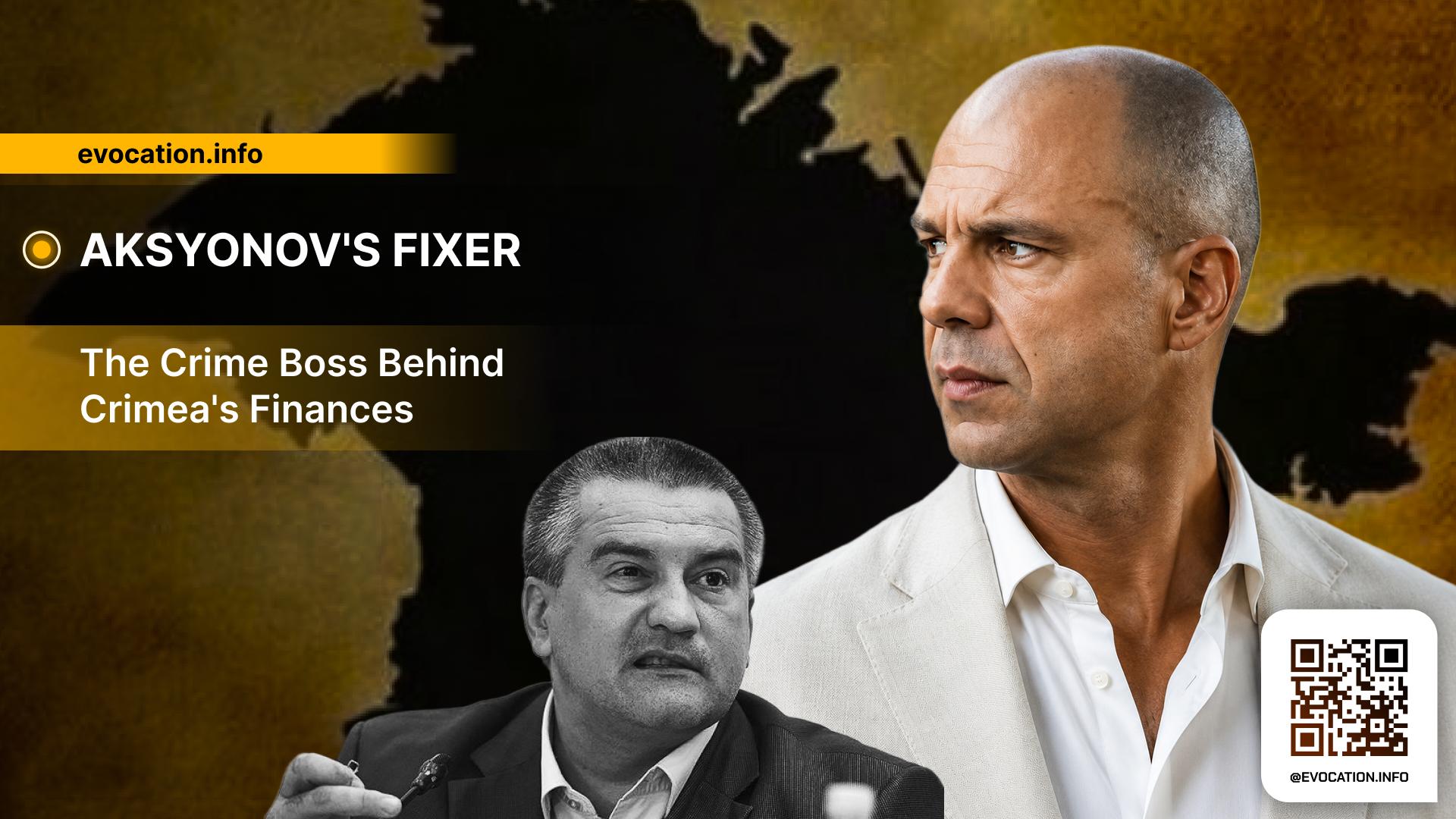
Temporarily occupied Crimea has been plunged into a severe economic crisis. The peninsula is facing fuel shortages and widespread power outages, store shelves are gradually emptying, and long lines are forming at ATMs. Yet what worries the local elite even more is the possible departure of one particular man. The evocation.info team takes a closer look at Crimea’s chief “shadow banker” — Yevgeny Dvoskin.
Extremely difficult times have come for the occupation authorities in temporarily occupied Crimea. The Armed Forces of Ukraine are systematically destroying the occupiers’ critical infrastructure, which is inevitably affecting every sphere of life on the peninsula: there is no electricity, no communications, and no gasoline. Food is still available in stores, but prices are rising, and products may soon disappear from the shelves as well because logistics have effectively been paralyzed. The banking sector has suffered a particularly serious blow. Even when electricity is unavailable and gasoline is in short supply, people still have bills to pay. Residents are panicking and rushing to withdraw their wooden rubles, fearing a banking collapse and feeling that their money will be safer under the mattress. The bankers themselves are panicking too, but for a different reason.
The banking sector on the peninsula rests on a single figure whose name is known to almost everyone — Yevgeny Dvoskin.
Odesa Roots and the Russian Mafia in America
Dvoskin was born in Odesa on March 21, 1966. When he was 11 years old, his family emigrated to the United States during a wave of Jewish emigration in search of a better life. Life did not become much better. The family lived in poverty, and he had to make his way in the world by the simplest available means — operating on the boundary between shady business and outright crime. This was how Eugene Shuster — or Slusker, depending on the transliteration — emerged. In the 1990s, he was convicted twice of fraud and fuel-related schemes. While serving time in prison, he met the notorious crime boss Vyacheslav Ivankov, nicknamed “Yaponchik.” The two developed a close relationship, and Ivankov began actively bringing his young protégé into his operations. That was how it all began: the “nephew” took charge of “Yaponchik’s” affairs and continued running illegal businesses on a much larger scale.
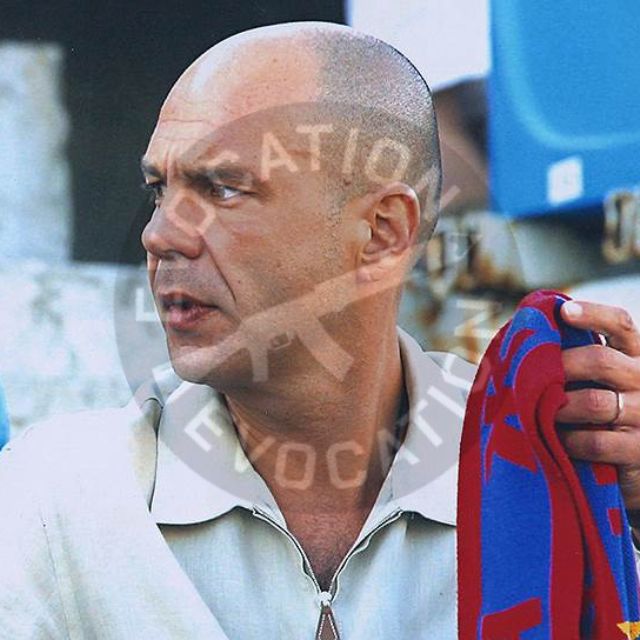
Deportation from the United States and Continued Criminal Activity in Russia
In the early 2000s, Shuster-Slusker returned to Ukraine — or, more precisely, was deported from the United States — despite rumors that he had actively cooperated with the FBI. It was there that he became Yevgeny Vladimirovich Dvoskin. Soon afterward, he moved to Russia, where he plunged back into criminal activity with renewed vigor, now as an experienced underworld figure. It is hardly surprising that a specialist in fraud and money laundering was drawn to the banking sector. He helped the right people seize control of banks and carry out transactions worth hundreds of millions. One high-profile case involved Mikhail Zavertyayev, the head of Intelfinance Bank, who refused to cooperate with Dvoskin and ended up in a hospital bed for a month and a half. The assault case was successfully closed, while 11 billion rubles “disappeared” from the bank. All the blame was placed on the chief accountant, who was accused of stealing 10 million rubles. This transformation of enormous sums into much smaller amounts would occur again later. It is, in fact, Dvoskin’s specialty.
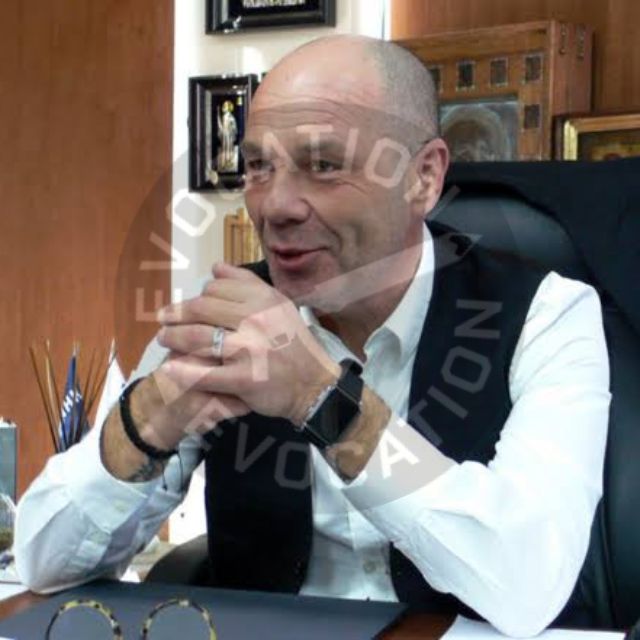
In 2008, while vacationing in Monaco, Dvoskin appeared to have finally been caught by the FBI. He was accused of fraud involving $2.3 million, while allegations of laundering 200 billion rubles surfaced in Russia. By all accounts, the fraudster should have received a lengthy prison sentence — either in the United States or in Russia. However, through an astonishing coincidence, the American authorities handed the case over to their Russian counterparts. Dvoskin returned to Moscow, where both the millions of dollars and the billions of rubles were quietly forgotten. The dirty business continued.
The Move to Crimea
After Russia’s occupation of Crimea, Dvoskin saw potential in the peninsula and brought his talents there. Together with the head of the occupation authorities, Sergey Aksyonov, he effectively rebuilt the banking system from scratch. Dvoskin became one of the key figures overseeing the arrival of RNKB/VTB Bank in Crimea, while his wife, Tatyana, effectively took control of Genbank. Uncooperative businesses quickly disappeared through the efforts of the Crimean Revival Fund, which handled the “nationalization” of assets across the peninsula. The fund was also controlled by Dvoskin, who used it to carry out corporate raids and deal with those unwilling to cooperate. Influential friends in Moscow helped whenever serious problems arose, as in the case of Genbank’s bankruptcy. In 2017, only massive injections of state funding saved the bank from disappearing altogether.
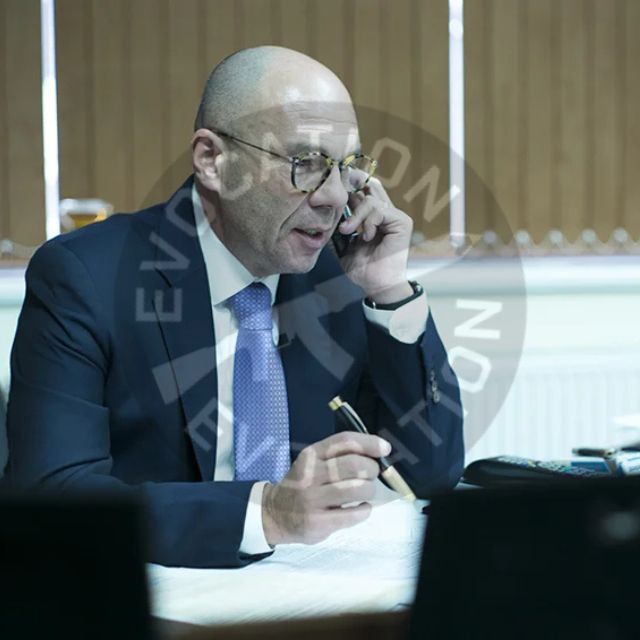
The “Special Military Operation” and a New Threat
In 2022, while Z-propagandists shouted about victory on television and tried to convince gullible Russians that the Russian campaign was succeeding, farsighted crooks like Dvoskin immediately understood which way the wind was blowing. Naturally, he continued his unofficial activities on the peninsula, organizing the seizure of buildings and the beating and abduction of people considered undesirable by the authorities.
However, since 2022, there has also been a systematic effort by Dvoskin to move his assets out of Crimea and Russia as a whole.
The Crimean Revival Fund ceased to exist in January 2022, one month before the announcement of the “special military operation.” Dvoskin himself made no sudden moves, but his family — his wife Tatyana, his daughter Yekaterina, now Alkhazova, and his granddaughter Darya — made several trips to the United Arab Emirates. And they did not travel there without a reason. According to property records, real estate in Dubai’s elite Palm Jumeirah district appeared under the ownership of Dvoskin’s wife and daughter.
Palm Jumeirah is an artificial island shaped like a date palm, located off the coast of Dubai in the Persian Gulf. Created in the early 2000s by the developer Nakheel through the large-scale reclamation of sand and rock, it is considered one of humanity’s greatest engineering achievements. The island is so enormous that it can be clearly seen from space. It is frightening even to imagine how much an apartment in such an area might cost.
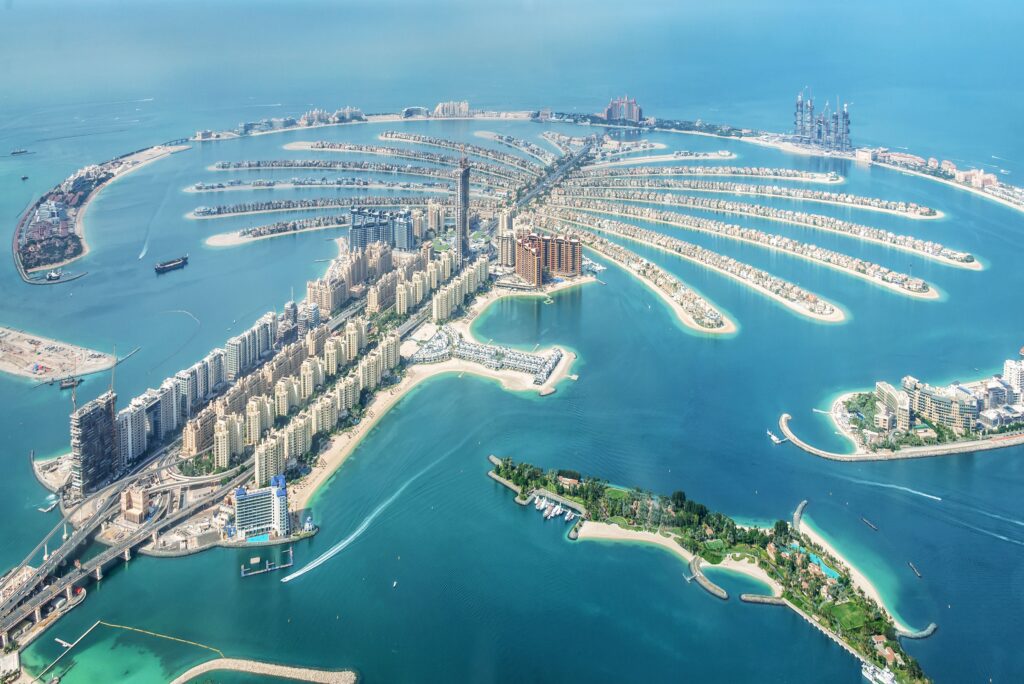
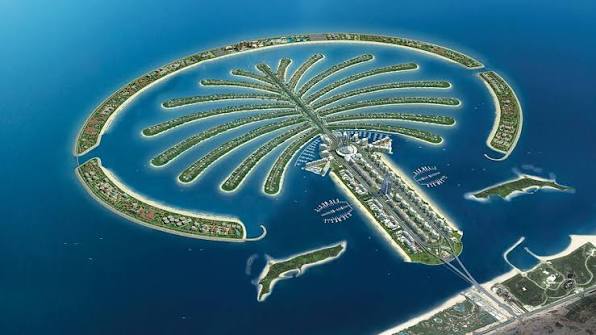
At first glance, everything seemed to be going perfectly if the family could afford such luxury properties.
Then, at the end of 2025, Dvoskin unexpectedly declared personal bankruptcy. Even more remarkably, he managed to settle debts amounting to 1.5 billion rubles simply by selling an aging Bentley for just 12 million rubles. And here we return once again to the remarkable phenomenon of enormous sums of money seemingly disappearing into thin air whenever Dvoskin is involved.
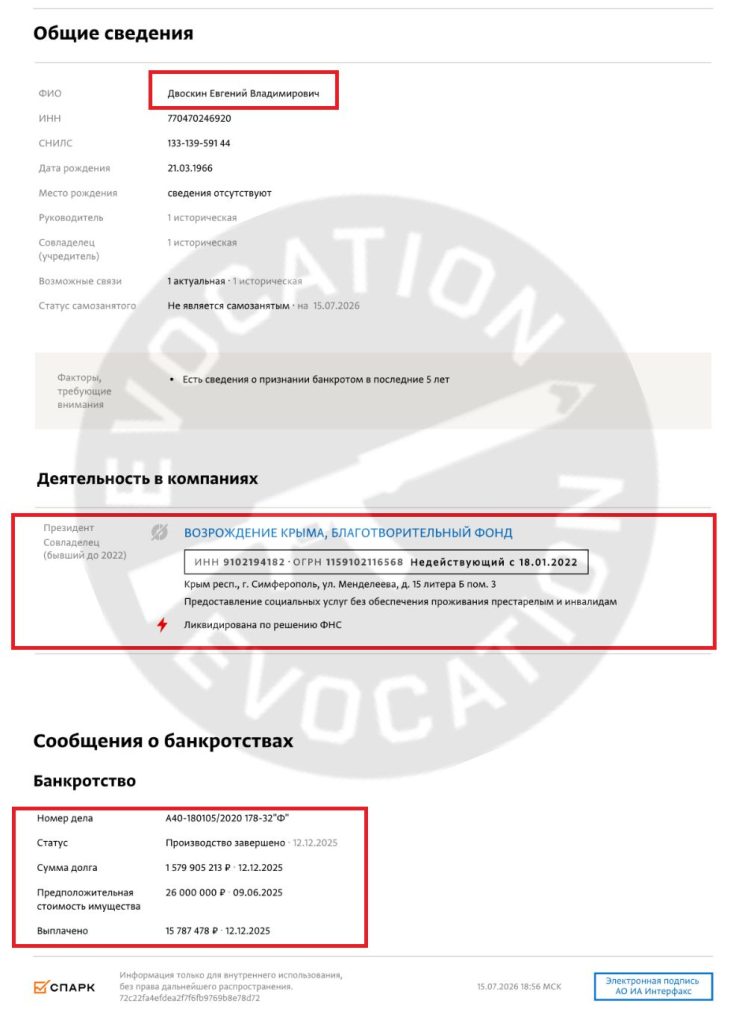
Still, a single 2007 Bentley is a small price to pay for a clean slate. Officially, Dvoskin no longer owes anyone anything. The foundation registered in his name has been dissolved, and he left Genbank’s shareholder structure years ago, while continuing to retain his influence over the peninsula’s entire banking sector. It is a sophisticated scheme that allows an experienced operator to simply “disappear” at the right moment and quietly resurface in his wife’s apartment in the UAE.


Tatyana Dvoskina deserves separate attention. A former gymnast, she married well and quickly became deeply involved in her husband’s business empire. Like Yevgeny, she erased her name from Genbank’s official records long ago, but never stopped her business activities. As of today, she is listed as the founder of three companies:
Stroyservice LLC (since February 7, 2024);
SZ Rebar Crimea LLC (since August 14, 2024);
SZ Veles Agro Invest LLC (since August 1, 2024).
The latter two companies reported significant losses for the 2025 financial year.

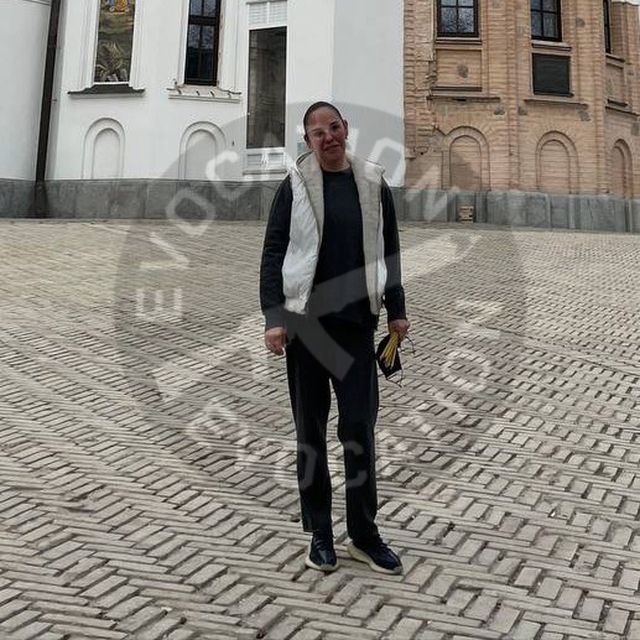
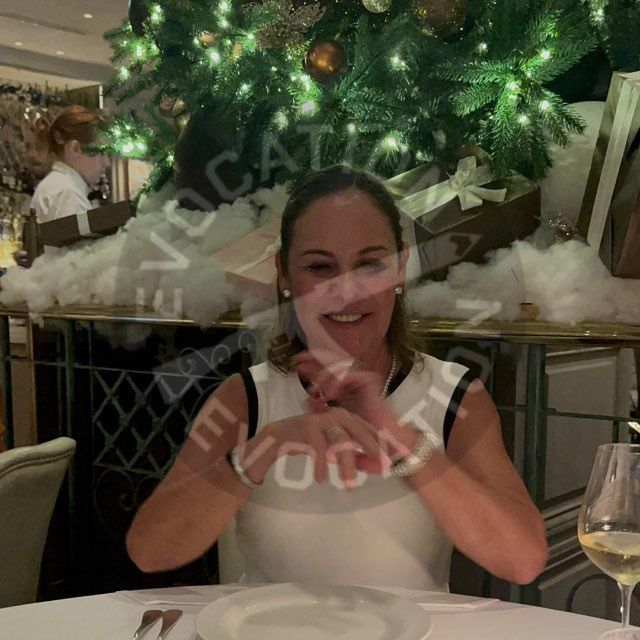
Dvoskin’s potential departure would represent a serious blow to Sergey Aksyonov, whose grip on power is already weakening amid his administration’s inability to cope with the peninsula’s deepening crisis. For years, Aksyonov could rely on the old-fashioned methods employed by Dvoskin — eliminating competitors, resolving banking crises through informal channels, and using force where necessary.
Today, however, there is no one left to perform those functions. Instead, Dvoskin is quietly moving every asset he can into the shadows while looking for attractive options for a new life abroad. That alone may be enough reason for Aksyonov himself to begin packing his bags and thinking seriously about his own escape before it is too late.
Read also

Coordinator of Russian Military Operations in the Sahel The “evocation.info” […]
The evocation.info team continues to expose Russian Telegram projects that […]
Rashist shot captured AFU soldiers: the “evocation.info” team has found […]